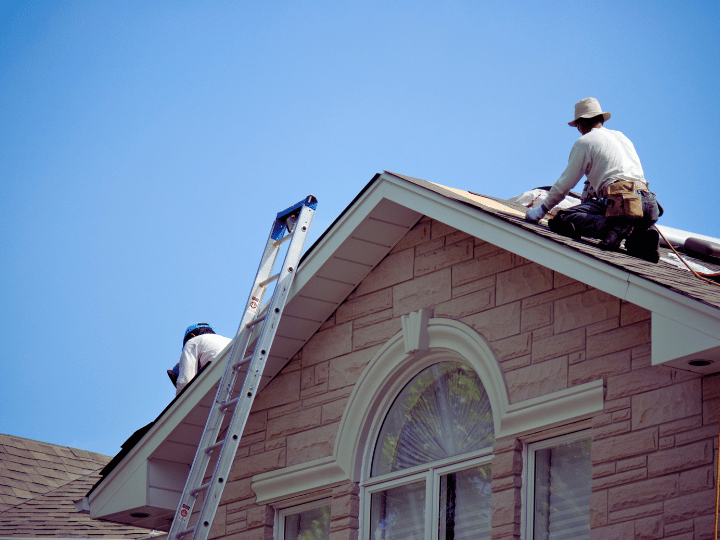
Why a Certified Roofing Contractor Matters in Georgia
In most states, a homeowner checking out a roofer starts with the state license number. In Georgia, that check does not exist, because the state does not issue a license specifically for roofing contractors. That single fact changes how a Marietta homeowner should evaluate a roofer, and it puts real weight on manufacturer certification, business accreditation, and insurance. Understanding why certification matters here helps a homeowner tell a legitimate roofing contractor from a risky one. Summit Roofing is GAF-certified and IKO-certified, serving Marietta and metro Atlanta.
The absence of a state roofing license in Georgia is not widely known, and it catches homeowners off guard. It means anyone can call themselves a roofing contractor without meeting a state standard, which raises the stakes on the credentials that do exist. In this environment, manufacturer certification becomes one of the most meaningful signals a homeowner has, because unlike a self-applied label, it is earned from a manufacturer that sets standards a roofing contractor has to meet.
What Manufacturer Certification Means
A roofing contractor earns certification from a shingle manufacturer like GAF or IKO by meeting the manufacturer's requirements, which typically include a track record, proper licensing and insurance where applicable, and a commitment to installation standards. That certification is not automatic and not universal; a manufacturer extends it to roofing contractors it is willing to associate with its products. For a homeowner, a GAF-certified or IKO-certified roofing contractor signals both product knowledge and a vetted track record, which is exactly the kind of assurance a state license would otherwise provide.
Certification also connects to how a roof is installed. Manufacturers certify roofing contractors in part to protect their products' performance, so a certified roofing contractor is one trained to install the manufacturer's systems correctly, with the right underlayment, ventilation, and details. A shingle only performs as intended when it is installed the way the manufacturer specifies, so certification links the product to proper installation. Summit Roofing holds GAF and IKO certification and installs to those standards.
Certification and Manufacturer Coverage
Manufacturer certification also relates to product coverage, though a homeowner should understand this carefully and not expect promises no one can verify. Manufacturers often make stronger product coverage available through certified roofing contractors, because the manufacturer trusts the installation. The specifics depend on the product and the situation, so a homeowner should ask the company to explain what applies rather than assume a particular tier. What matters at the evaluation stage is that certification signals a that company the manufacturer stands behind, which is a meaningful credential in a state without licensing.
No State Roofing License in Georgia
Georgia does not issue a license specifically for roofing contractors, so anyone can use the title without meeting a state standard, which puts real weight on manufacturer certification, accreditation, and insurance as the credentials a homeowner can verify.
Certification Ties to Installation
Manufacturers certify roofing contractors in part to protect their products' performance, so a certified roofer is trained to install the manufacturer's systems correctly, since a shingle only performs as intended when installed to specification.
Uninsured Work Shifts Risk to You
Hiring an uninsured roofing contractor can leave a homeowner liable for property damage or a worker's injury during the job, which is why confirming current liability and workers' compensation insurance is a baseline check before hiring.
Insurance: The Other Essential Credential
Alongside certification, insurance is the credential a homeowner must confirm, because it protects the home and the homeowner directly. The roofer's liability insurance covers damage to the property during the work, and workers' compensation covers injuries to the crew, so a homeowner is not exposed if something goes wrong on the roof. Hiring an uninsured a local company to save money can leave a homeowner liable for exactly these risks. Summit Roofing is licensed and insured, and a homeowner is right to confirm current insurance before any roofer starts work.
Business accreditation adds another layer a homeowner can check. A BBB Accredited Business has committed to standards of conduct and has a public record a homeowner can review. In a state without roofing licensure, that public accountability is one more signal that the company operates as a real, standing business rather than a temporary operation. Summit Roofing is a BBB Accredited Business, which, with its certifications and insurance, gives a homeowner the verifiable credentials that Georgia's lack of licensing makes so important.
Why This Matters More After a Storm
The credential question becomes urgent after a storm, when out-of-town crews arrive to chase hail damage. These storm chasers often cannot show manufacturer certification, local accreditation, or a way to reach them next season, exactly the credentials that matter most in Georgia. A certified, insured, locally accredited the roofing company is the safer choice in that moment, because those credentials are what a homeowner has instead of a state license to confirm the roofer is accountable. Summit Roofing brings those credentials as a local company that will still be here after the storm season passes.
Choosing a certified contractor also protects the roof itself. A storm-damaged roof repaired or replaced by an uncertified, uninsured crew may be done wrong, void that product coverage, or leave the homeowner with no recourse if it fails. A GAF-certified and IKO-certified contractor installs to the manufacturer's standards and stands behind the work, which is what protects the investment. That protection is the practical payoff of the credentials, not just a badge.
How to Verify Before You Hire
Verifying a that company in Georgia comes down to asking for and confirming the credentials that replace the missing license. A homeowner should confirm manufacturer certification, review the BBB accreditation, and ask for current proof of insurance, and a legitimate roofer provides all three without hesitation. Reluctance to share any of them is itself a warning. Summit Roofing provides these credentials and welcomes the check, because a homeowner who verifies is a homeowner who understands what accountability looks like in a state without roofing licensure.
What GAF and IKO Certification Covers
GAF and IKO are two of the major shingle manufacturers, and their certification programs vet the roofers they extend certification to. A certified company has met the manufacturer's requirements, which generally include a track record, appropriate insurance, and a commitment to installing the manufacturer's systems to specification. For a homeowner, that means a certified company is one the manufacturer is willing to associate with its products, which is a meaningful vote of confidence in a state that offers no license to check. Summit Roofing holds both GAF and IKO certification.
Holding certification from more than one manufacturer also gives a homeowner options. Different shingle lines suit different homes and budgets, and a company certified with more than one manufacturer can match the product to the home rather than pushing a single line. That flexibility, backed by proper installation training, serves the homeowner better than a one-product approach.
Certification and the Installation Itself
A shingle performs only as well as its installation. Manufacturers publish detailed installation specifications, and a shingle installed against those specifications can fail early and lose that coverage. A certified company is trained to install to the manufacturer's standards, with correct fastening, underlayment, ventilation, and flashing details. That link between certification and correct installation is the practical value of the credential, because it protects both the roof's performance and the homeowner's coverage.
Red Flags in an Uncertified Bid
When a homeowner compares bids, the uncertified, uninsured bid is often the cheapest, and the low price hides the risk. A company without certification may install against manufacturer specifications, void that coverage, and carry no insurance to protect the homeowner if something goes wrong. A bid that cannot be backed by verifiable credentials is a bid to treat with caution, whatever the price. Summit Roofing's certifications, accreditation, and insurance are exactly the credentials that separate an accountable company from a risky low bid.
Business Accreditation and Public Record
Business accreditation adds a layer of accountability a homeowner can check independently. A BBB Accredited Business has committed to standards of conduct and carries a public record a homeowner can review, which is one more way to confirm a company operates as a standing, accountable business rather than a temporary operation. In a state without roofing licensure, that public record is a useful complement to certification and insurance. Summit Roofing is a BBB Accredited Business, and a homeowner is welcome to review that record as part of checking any roofer.
Verifying Before the Work
The time to verify credentials is before the work begins, not after a problem appears. Confirming certification, reviewing the accreditation, and asking for current proof of insurance are quick steps that a legitimate company supports without hesitation. Doing them up front filters out the risky operators, especially in storm season when strangers arrive at the door. Summit Roofing provides its credentials readily, because a homeowner who verifies before hiring is protecting an investment the size of a roof, and that verification is exactly what Georgia's lack of licensing makes necessary.
Why the Record Brings Out Storm Chasers
Georgia's lack of roofing licensure becomes most dangerous right after a storm, and the local record shows how often that moment comes. Cobb County has logged roughly 100 hail reports over about the last two decades, saw quarter-size hail near Kennesaw in September 2025, and took repeated hail and 60 mile-per-hour wind events across metro Atlanta through the summer of 2026. Each major event draws out-of-town crews who knock on doors, and because no state license exists to check, a homeowner has only certification, accreditation, and insurance to tell a legitimate company from a crew that will be gone next season.
That is exactly when verifiable credentials do their work. A storm chaser rarely holds manufacturer certification, local accreditation, or a reachable local address, while a certified, insured, locally accredited company can show all three. Confirming them before signing, even under the pressure that follows a storm, is what protects a homeowner in a state without licensure. Summit Roofing is GAF-certified and IKO-certified, a BBB Accredited Business, and licensed and insured, and it welcomes that check exactly because it is what separates an accountable local company from the crews the storm season brings through.
Credentials Are the Homeowner's Protection
In a state that offers no roofing license to check, the credentials a homeowner can verify are the whole of their protection, and that is worth taking seriously. Manufacturer certification signals a vetted, trained installer. Business accreditation signals a company with a public record and standards of conduct. Insurance protects the homeowner from liability during the work. Together they do the job a state license does elsewhere, and a company that carries and readily shows all three is one a homeowner can hire with confidence. Summit Roofing holds those credentials and welcomes the homeowner who checks them, because verifying is exactly what accountability looks like where no license exists to rely on.
For a homeowner comparing options, the lesson is to treat verifiable credentials as the baseline rather than the tiebreaker. A company that cannot show certification, accreditation, and current insurance is not a bargain at any price, because those credentials are what stand behind the roof once the work is done. A company that shows them readily has cleared the bar that matters most in Georgia. Summit Roofing meets that baseline and builds on it with local knowledge and a repair-first approach.
Summit Roofing is a locally owned and operated, licensed and insured, GAF-certified and IKO-certified, BBB-accredited roofing contractor serving Marietta and metro Atlanta, with a repair-first approach, storm and hail damage restoration, insurance-claim help, and free inspections. For a certified company whose credentials a homeowner can verify, contact Summit Roofing or call 770-545-5244 for a free inspection.
The origin of the name is uncertain. It is believed that the city was named for Mary Cobb, the wife of the U.S. Senator and Superior Court judge Thomas Willis Cobb. The county is named for Cobb.[6]
Homes were built by early settlers near the Cherokee town of Big Shanty (now Kennesaw) before 1824.[7] The first plot was laid out in 1833. Like most towns, Marietta had a square (Marietta Square) in the center with a courthouse. The Georgia General Assembly legally recognized the community on December 19, 1834.[7]
Built in 1838, Oakton House[8] is the oldest continuously occupied residence in Marietta. The original barn, milk house, smokehouse and well house remain on the property. The gardens contain the boxwood parterre from the 1870s. Oakton was Major General Loring's headquarters during the Battle of Kennesaw Mountain in 1864.[9]
Marietta was initially selected as the hub for the new Western and Atlantic Railroad and business boomed.[7] By 1838, roadbed and trestles had been built north of the city. In 1840, political wrangling stopped construction for a time and, in 1842, the railroad's new management moved the hub from Marietta to an area that became Atlanta. In 1850, when the railroad began operation, Marietta shared in the resulting prosperity.[7]
The businessman and politician John Glover arrived in 1848. A popular figure, Glover was elected mayor when the city incorporated in 1852.[7] Another early resident was Carey Cox, a physician, who promoted a "water cure" that attracted tourists to the area. The Cobb County Medical Society recognizes him as the county's first physician.[7]
The Georgia Military Institute was built in 1851 and the first bank opened in 1855.[7] During the 1850s, fire destroyed much of the city on three separate occasions.[7]
By the time the Civil War began in 1861, Marietta had recovered from the fires.[7]
In April 1862, James Andrews, a civilian working with the Union Army, came to Marietta, along with a small party of Union soldiers dressed in civilian clothing. The group spent the night in the Fletcher House hotel (later known as the Kennesaw House and now the home of the Marietta Museum of History) located immediately in front of the Western and Atlantic Railroad. Andrews and his men, who later became known as the Raiders, planned to seize a train and proceed north toward the city of Chattanooga, destroying the railroad on their way. They hoped, in so doing, to isolate Chattanooga from Atlanta and bring about the downfall of the Confederate stronghold. The Raiders boarded a waiting train on the morning of April 12, 1862, along with other passengers. Shortly after, the train made a scheduled stop in the town of Big Shanty, now known as Kennesaw. When the other passengers alighted for breakfast, Andrews and the Raiders stole the engine and the car behind it, which carried the fuel. The engine, called The General, and Andrews' Raiders had begun the episode now known as the Great Locomotive Chase.[7] Andrews and the Raiders failed in their mission. He and all of his men were caught within two weeks, including two men who had arrived late and missed the hijacking. All were tried as spies, convicted and hanged.[10]
In 1892, the city established a public school system. It included a Marietta High School and Waterman Street School for white students. A school for black students was also created on Lemon Street. The state of Georgia did not provide a high school for black students until 1924, when Booker T. Washington High School opened in Atlanta, after decades of black citizens requesting educational resources.[12]
Leo Frank was lynched at 1200 Roswell Road just east of Marietta on August 17, 1915. Frank, a Jewish-American superintendent of the National Pencil Company in Atlanta, had been convicted on August 25, 1913, of the murder of one of his factory workers, 13-year-old Mary Phagan. The murder and trial, sensationalized in the local press, portrayed Frank as sexually depraved and captured the public's attention. An eleventh-hour commutation by Governor John Slaton of Frank's death sentence to life imprisonment because of problems with the case against him created great local outrage. A mob threatened the governor to the extent that the Georgia National Guard had to be called to defend him and he left the state immediately with his political career over. Another mob, systematically organized for the purpose, abducted Frank from prison, drove him to Marietta and hanged him. The leaders of the abduction included past, current and future elected local, county and state officials. There were two state legislators, the mayor, a former governor, a clergyman, two former Superior Court justices and an ex-sheriff. In reaction, Jewish activists created the Anti-Defamation League, to work to educate Americans about Jewish life and culture and to prevent anti-Semitism.[13][14]
Located near the center of Cobb County, between Kennesaw to the northwest and Smyrna to the southeast. U.S. Route 41 and State Route 3 run through the city northeast of downtown as Cobb Parkway, and Interstate 75 runs parallel to it through the eastern part of Marietta, with access from exits 261, 263, 265, and 267. Downtown Atlanta is 20 miles (32 km) to the southeast, and Cartersville is 24 miles (39 km) to the northwest.
According to the United States Census Bureau, Marietta has a total area of 23.2 square miles (60.0 km2), of which 23.1 square miles (59.8 km2) is land and 0.077 square miles (0.2 km2), or 0.38%, is water.[5]
As of the 2020 census, Marietta had a population of 60,972. The median age was 34.7 years. 20.5% of residents were under the age of 18 and 13.6% of residents were 65 years of age or older. For every 100 females there were 92.2 males, and for every 100 females age 18 and over there were 89.8 males age 18 and over.[34][35]
100.0% of residents lived in urban areas, while 0.0% lived in rural areas.[36]
There were 24,865 households in Marietta, of which 27.4% had children under the age of 18 living in them. Of all households, 36.2% were married-couple households, 21.8% were households with a male householder and no spouse or partner present, and 34.9% were households with a female householder and no spouse or partner present. About 33.9% of all households were made up of individuals and 10.5% had someone living alone who was 65 years of age or older. There were 13,788 families residing in the city.[34]
There were 26,644 housing units, of which 6.7% were vacant. The homeowner vacancy rate was 1.7% and the rental vacancy rate was 7.5%.[34]
At the 2010 census, there were 56,641 people and 22,261 households.[2] The population density was 2,684.1 per square mile (1,036.3/km2). There were 25,227 housing units at an average density of 1,152.6 per square mile (445.0/km2). The racial make-up was 52.7% White, 31.5% African American, 0.1% Native American, 3.0% Asian, 0.1% Pacific Islander, 9.1% from other races and 3.3% from two or more races. Hispanic or Latino people of any race were 20.6% of the population.
There were 23,895 households, of which 27.8% had children under 18 living with them, 35.4% were married couples living together, 13.8% had a female householder with no husband present, and 45.5% were non-families. 32.8% of all households were made up of individuals, and 6.9% had someone living alone who was 65 years of age or older. The average household size was 2.39, and the average family size was 3.05.
22.4% of the population were under the age of 18, 14.1% from 18 to 24, 39.4% from 25 to 44, 15.7% from 45 to 64 and 8.3% were 65 years of age or older. The median age was 30 years. For every 100 females, there were 101.3 males. For every 101 females age 18 and over, there were 100.3 males.
Incorporated as a village in 1834 and as a city in 1852, the city of Marietta is organized under a form of government consisting of a mayor, city council, and city manager. The city council is made up of representatives elected from each of seven single-member districts within the city, and a mayor elected at-large.
The city council is the governing body of the city with authority to adopt and enforce municipal laws and regulations. The mayor and city council appoint members of the community to sit on the city's various boards and commissions, ensuring that a broad cross-section of the town is represented in the city government.
The city council appoints the city manager, the city's chief executive officer. The council-manager relationship is comparable to that of a board of directors and CEO in a private company or corporation. The city manager appoints city department heads and is responsible to the city council for all city operations. The city council also appoints the city attorney, who serves as the city's chief legal officer; and the city clerk, who maintains all the city's records.
Terms of office are for four years, and the number of terms a member may serve is unlimited. There are seven councilmen, each representing a separate ward.[37]
^Hammett acted as mayor until about July 1, 1864, when the city was invaded by the Federal Army and was occupied by them until they evacuated on November 15. In the meantime, a large portion of the city had been reduced to ashes.
^On reestablishing order, Winn was elected mayor for 1865. He served until October 1, when he resigned. A. N. Simpson was elected to fill the vacancy.
^T. M. Brumby Sr. was elected for the 1898–1899 term, but he resigned before taking the oath of office. A special election was held on January 8, 1898.
Dobbins Air Reserve Base on the south side of town and a Lockheed Martin manufacturing plant are among the major industries in the city. The Lockheed Georgia Employees Credit Union is based in Marietta.[39]
Into the 1950s the Louisville and Nashville Railroad operated the Midwest-Florida trains, the Cincinnati-Florida Flamingo and the Chicago-Florida Southland, which made daily stops in Marietta Depot. Into the 1960s, the L&N's Chicago & St. Louis-Florida trains, Dixie Flyer and Dixie Limited also made stops there. The final train was the L&N's St. Louis, Missouri - Evansville, Indiana - Atlanta Georgian, which ended service on April 30, 1971. (Until 1968, the train also had a northern leg from Evansville to Chicago.)[42]
All of the public schools in Marietta proper are operated by the Marietta City Schools (MCS), while the remainder of the schools in Cobb County, but outside the city limits, is operated by the Cobb County School District, including all of the county's other cities. MCS has one high school, Marietta High School, grades 9–12; a middle school, Marietta Middle School, grades 7 and 8; Marietta Sixth Grade Academy; and several elementary schools: A.L. Burruss, Dunleith, Hickory Hills, Lockheed, Marietta Center for Advanced Academics, Park Street, Sawyer Road, and West Side.[44] Many residents of Marietta attend Cobb County public schools, such as Joseph Wheeler High School, Sprayberry High School, Alan C. Pope High School, and Walton High School. These schools are known to compete fiercely in athletics, especially basketball, as both Wheeler and Marietta High School frequently produce D-1 players. The town of Marietta is also home to the Walker School, a private pre-kindergarten through 12th-grade school. Walker competes in the Georgia High School Association Class A (Region 6) athletic division while Marietta and Wheeler compete in Class AAAAAA (Regions 4 and 5, respectively).
The school system employs 1,200 people. MCS is an International Baccalaureate (IB) World School district. In 2008, MCS became only the second IB World School district in Georgia authorized to offer the IB Middle Years Program (MYP) for grades 6–10. MCS is one of only a few school systems nationwide able to provide the full IB (K-12) continuum.[45]
The Marietta Campus of Kennesaw State University, formerly known as Southern Polytechnic State University (SPSU) before being merged into Kennesaw State, and Life University are located in Marietta, serving more than 20,000 students in more than 90 programs of study.
Downtown is the town square and former location of the county courthouse. The square is the site of several cultural productions and public events, including a weekly farmers' market.
The Marietta Players perform semi-professional theater year-round. The historic Strand Theatre has been renovated back to its original design and features live theatre, concerts, classic films, and other events.[12] The Marietta/Cobb Museum of Art is in the old Post Office building.
The Marietta History Center exhibits the history of the city and county. The center is home to thousands of artifacts including items from Marietta residents and businesses. The Marietta Gone with the Wind Museum is located in the Historic Brumby Hall and houses a private collection of memorabilia related to Gone with the Wind, both the book and the film.[12] The William Root House Museum and Garden is the oldest wood-frame house still standing in Marietta, built c. 1845. Once owned by William Root, one of Marietta's earliest citizens and merchants whose drugstore was located in the Square.[47]
The Big Chicken, which currently sits on top of a KFC restaurant, has been a landmark on U.S. 41 and Roswell Road since 1963.[48]
The city includes the Kennesaw House, one of only four commercial buildings in Marietta not burned to the ground in Sherman's March to the Sea. The Kennesaw House is home to the Marietta History Center[50] which tells the history of Marietta and Cobb County.
^"On this date in Civil War history: The Great Locomotive Chase – April 12, 1862". This Week in the Civil War. April 13, 2012. cite web: |access-date= requires |url= (help)CS1 maint: deprecated archival service (link)
^PRISM Climate Group Oregon State University, Agricultural Research Center. "USDA Plant Hardiness Zone Map". USDA. Archived from the original on February 27, 2014. Retrieved February 2, 2014.
^Elvena B. Tillman (1971). "Alice Josephine McLellan Birney". In Edward T. James; Janet Wilson James; Paul S. Boyer (eds.). Notable American Women, 1607–1950: A Biographical Dictionary. Harvard University Press. pp. 147–148. ISBN0674627342.
^"Melanie Oudin". Sony Ericsson WTA Tour. Archived from the original on August 28, 2009. Retrieved June 24, 2012.
^Whitburn, Joel (2004). The Billboard Book of Top 40 Hits (8th ed.). New York: Billboard Books. p. 478. ISBN0-8230-7499-4. Born on 9/3/75 in Marietta, Georgia. Pop singer.
^Rhodes, Cyrus. "Marco Restrepo". RockNRollView.com. Blackwell. Archived from the original on March 4, 2016. Retrieved December 6, 2015.
^"Cody Rhodes". Accelerator3359. Retrieved June 24, 2012.
On the Newport Beach coast, standard grade cedar with light maintenance sits toward the lower end of its range, while a top grade roof with consistent maintenance lasts considerably longer. Maintenance is the biggest factor, so annual cleaning and a preservative treatment every few years protect the higher end of that range.
What does a GAF or IKO certified roofer mean?
They can. In HOA-governed communities such as Newport Coast, the association's architectural rules may set roofing requirements that sit on top of the state fire code. It is worth confirming both the HOA rules and your insurance requirements before choosing cedar, since both can shape what is allowed.
Why is insurance important when hiring a roofer?
Many California carriers now require fire-retardant-treated assemblies or decline real wood entirely. If your carrier will not write cedar, a Class A rated composite shingle keeps the cedar look while satisfying the code and the insurer. Confirming your carrier's position before the project avoids a non-renewal surprise later.